Knot in Hyde Park (KiHP)

Knot in Hyde Park is a group of volunteers committed to bringing the issue of Japanese Knotweed (JKW) out into the open. We want to make it something that we manage as a community; something that we deal with rather than fear or ignore. We started our work in the spring of 2021.
What is JKW and why should we care about it?
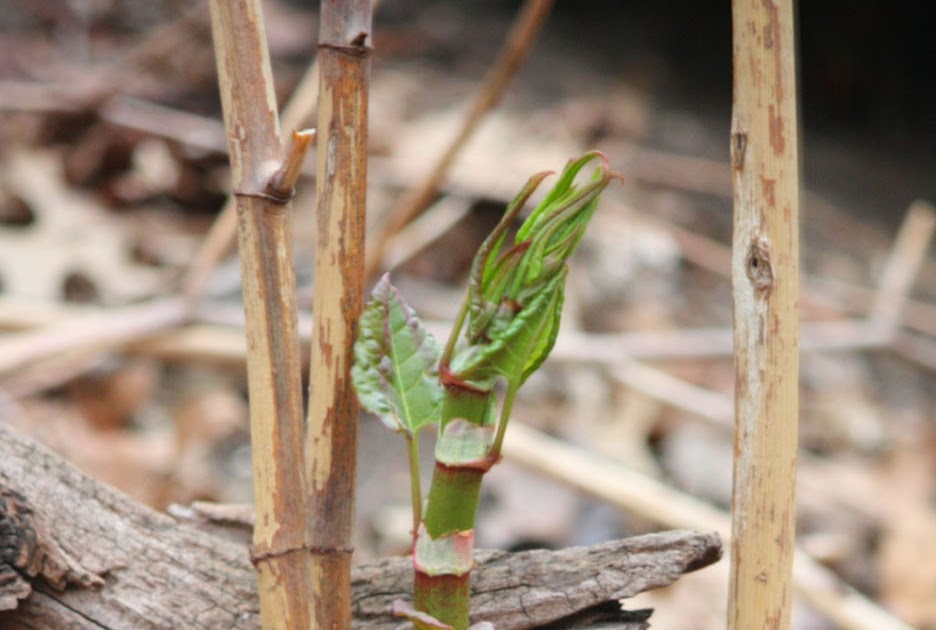
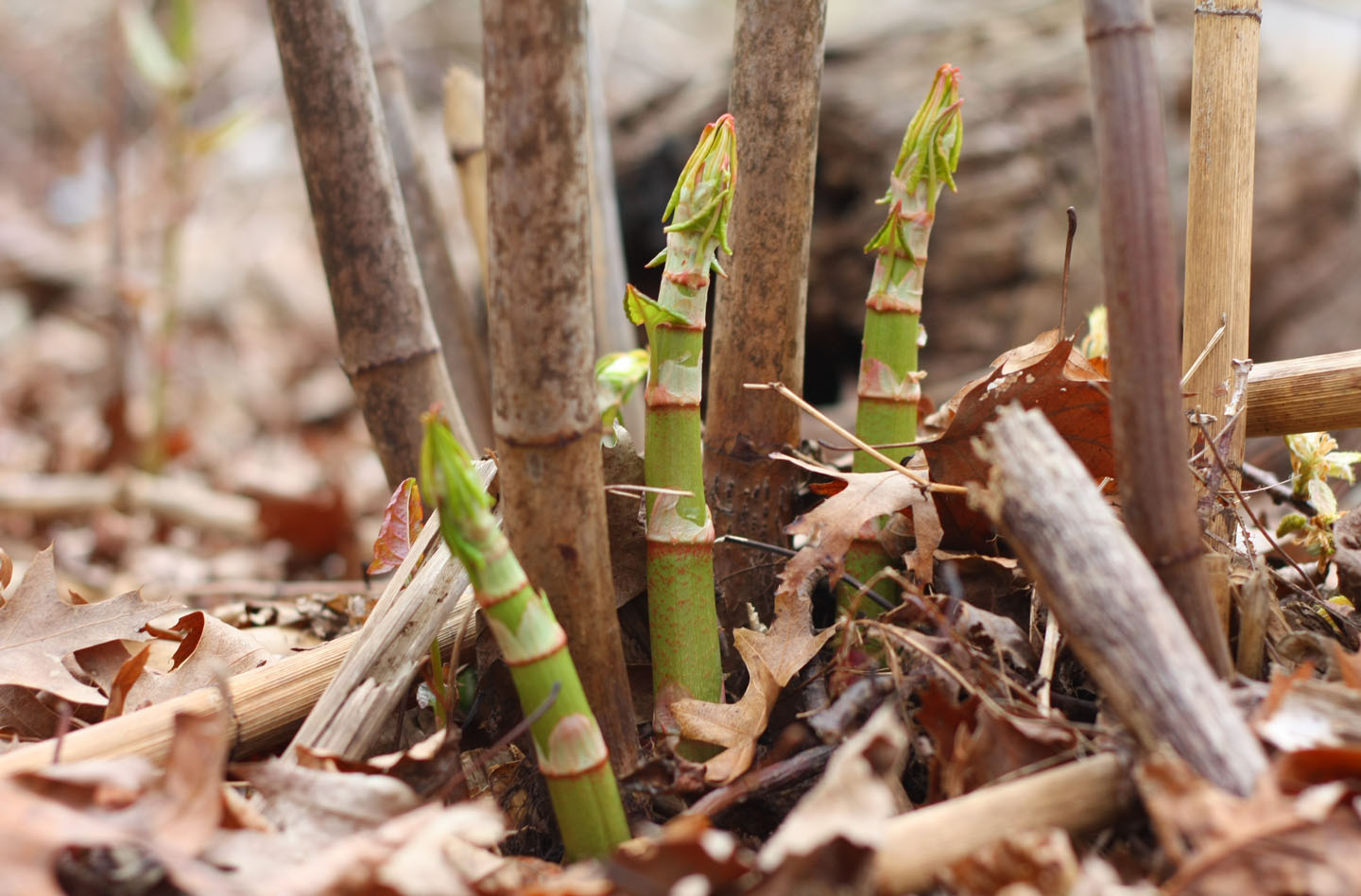
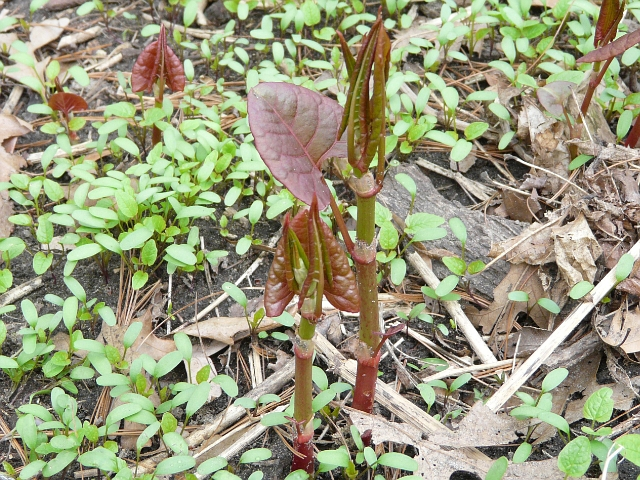
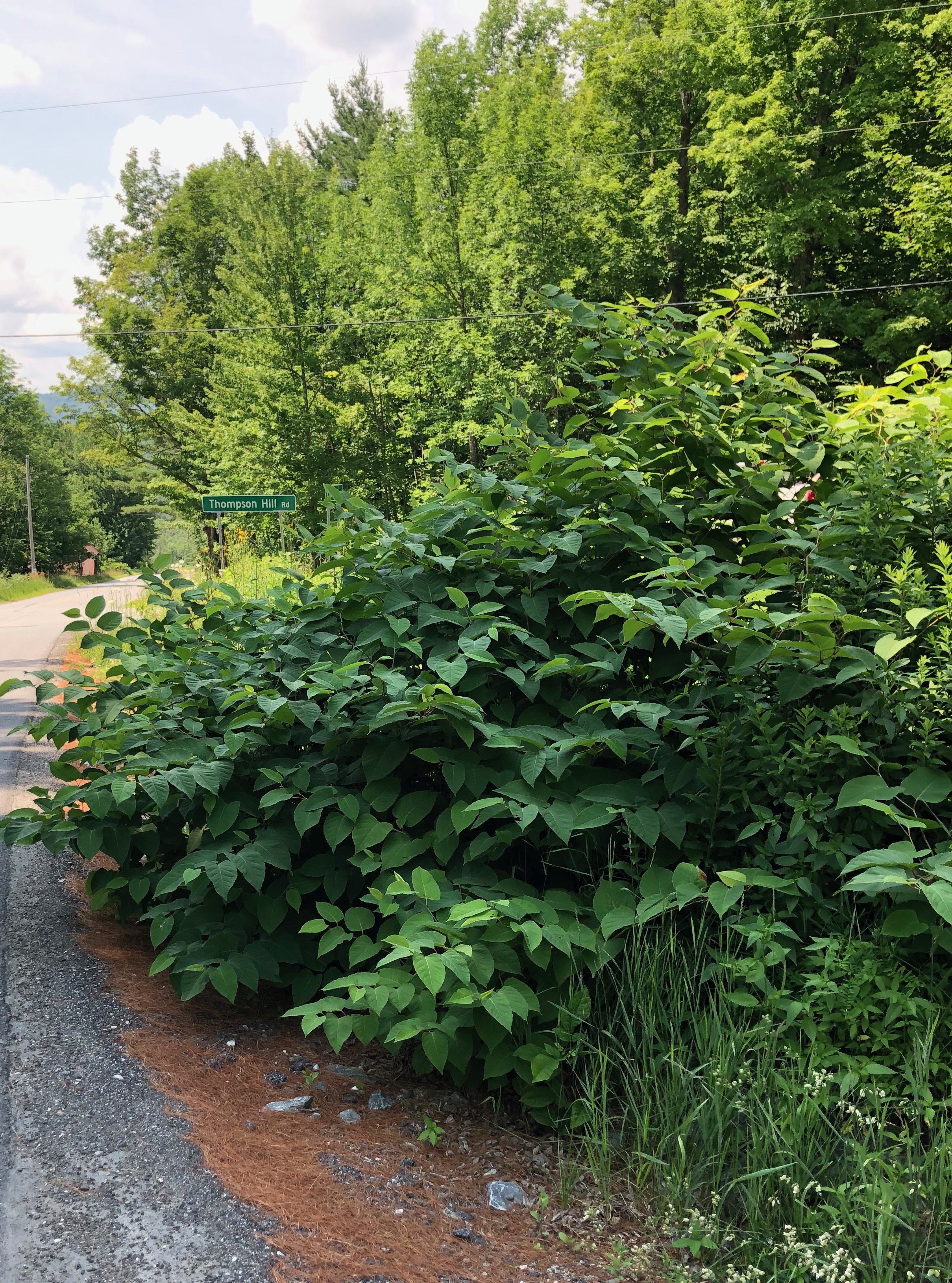
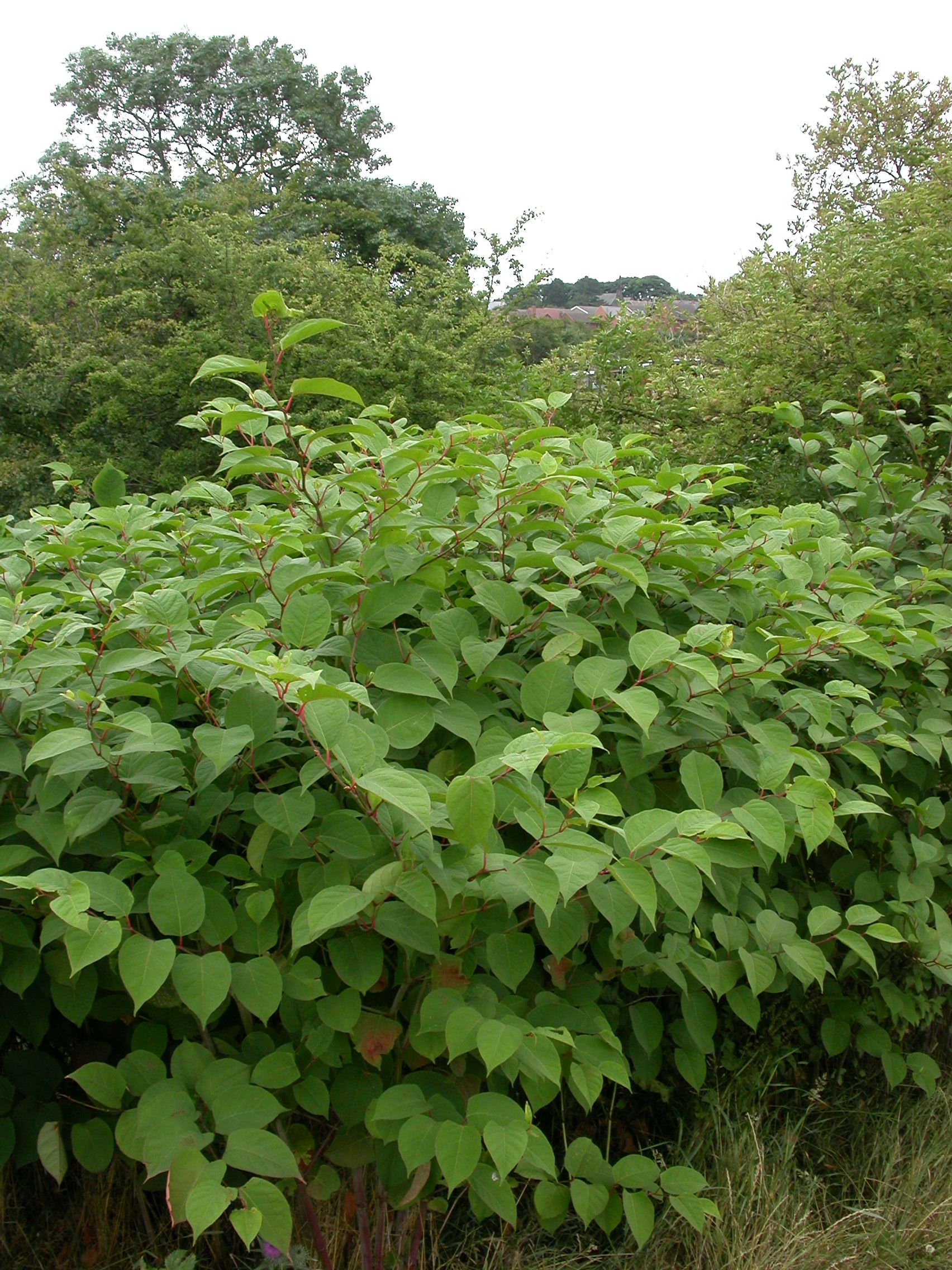
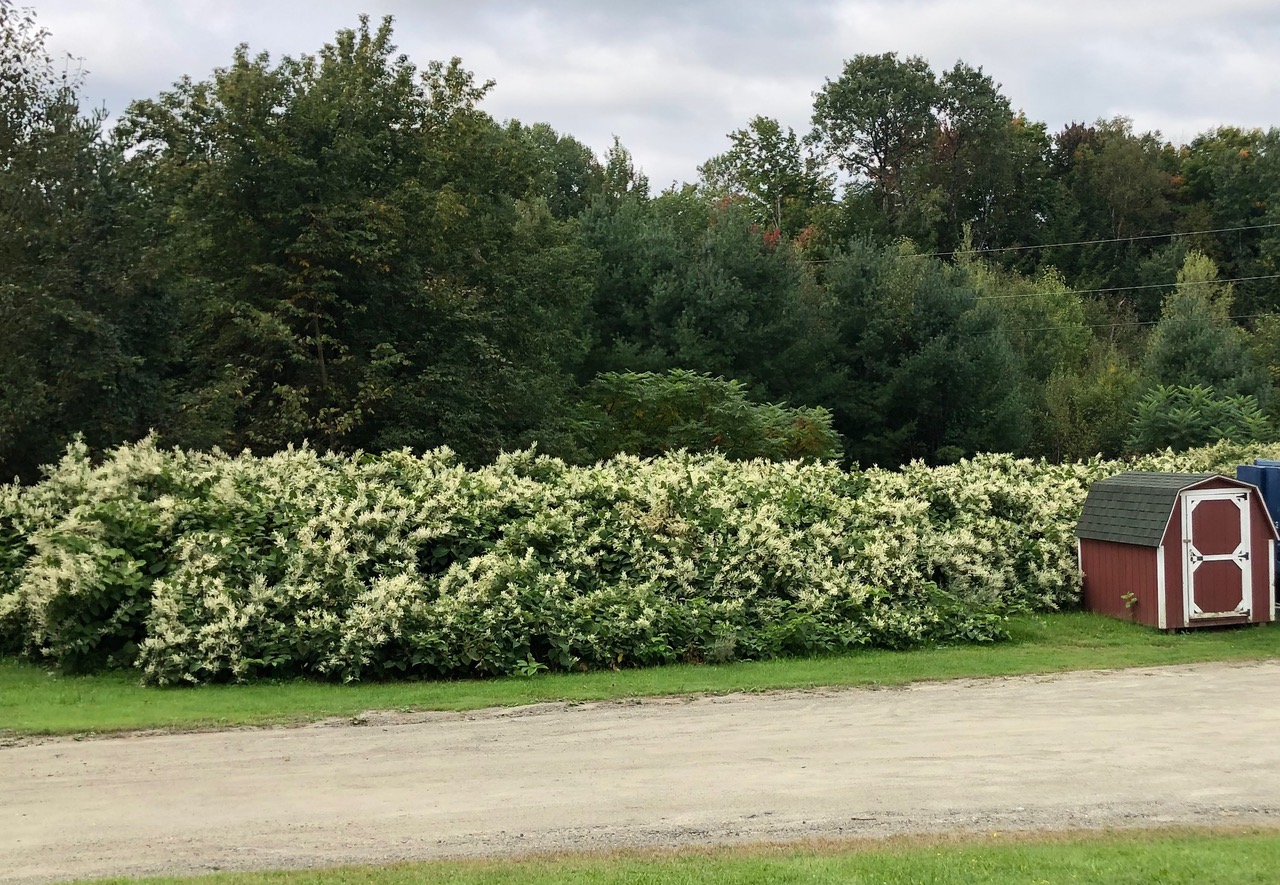
JKW came to the USA from Asia in the late 1800s. It has now become one of the most impactful and formidable invasive plants, present in at least 42 of the 50 states.
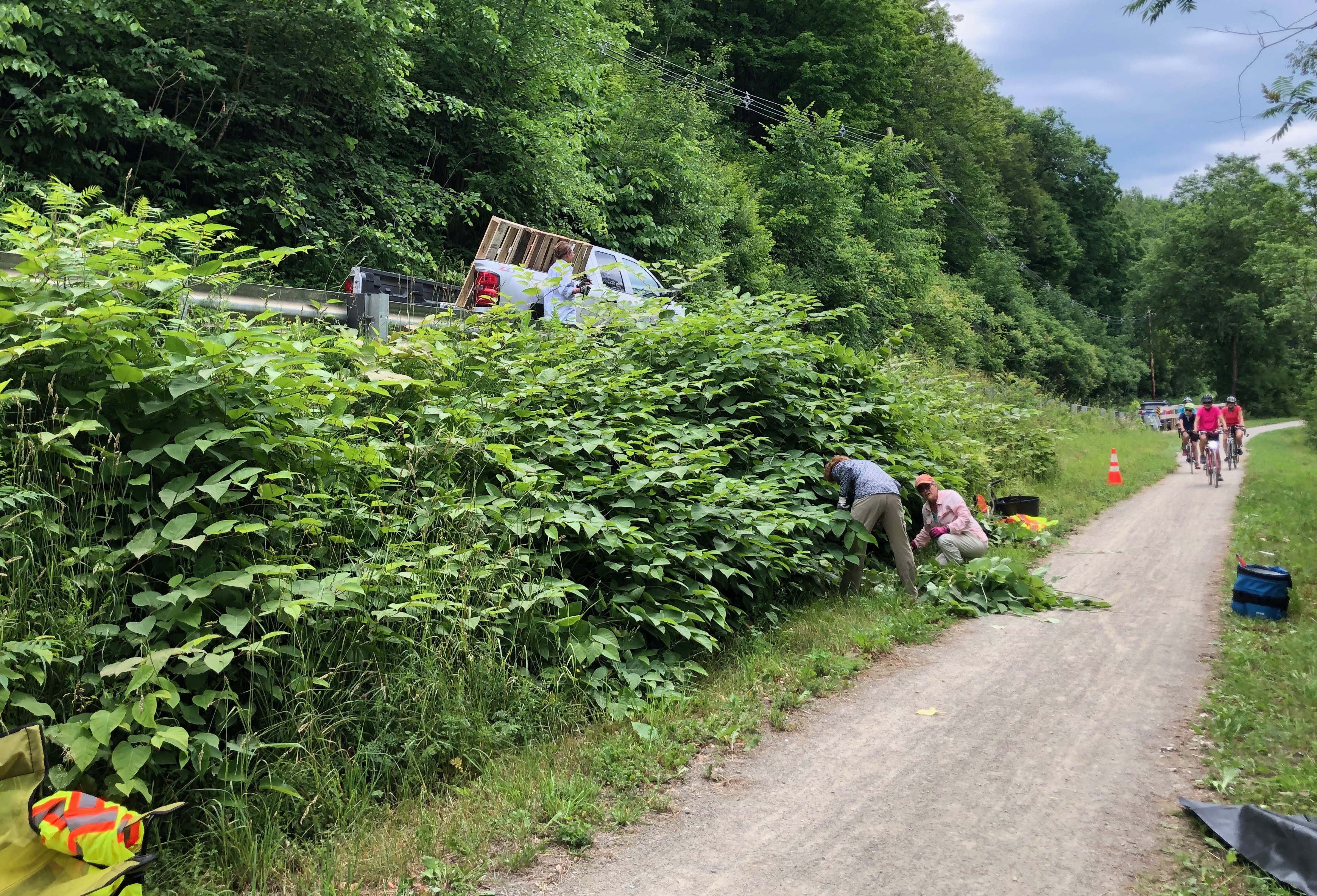
It is a fast-growing bamboo-like perennial plant that grows upwards of 10' every season. It spreads quickly to form dense thickets of pure knotweed. It can alter soil chemistry, out-compete native plants, and displace wildlife that depend on native flora. A mature stand shades out all understory plants and essentially stops natural succession. JKW also poses a significant threat to riverside areas, where it gets carried along during flooding events, regrows and colonizes the scoured shores and islands, resulting in more successive erosion and putting fish spawning grounds at risk.
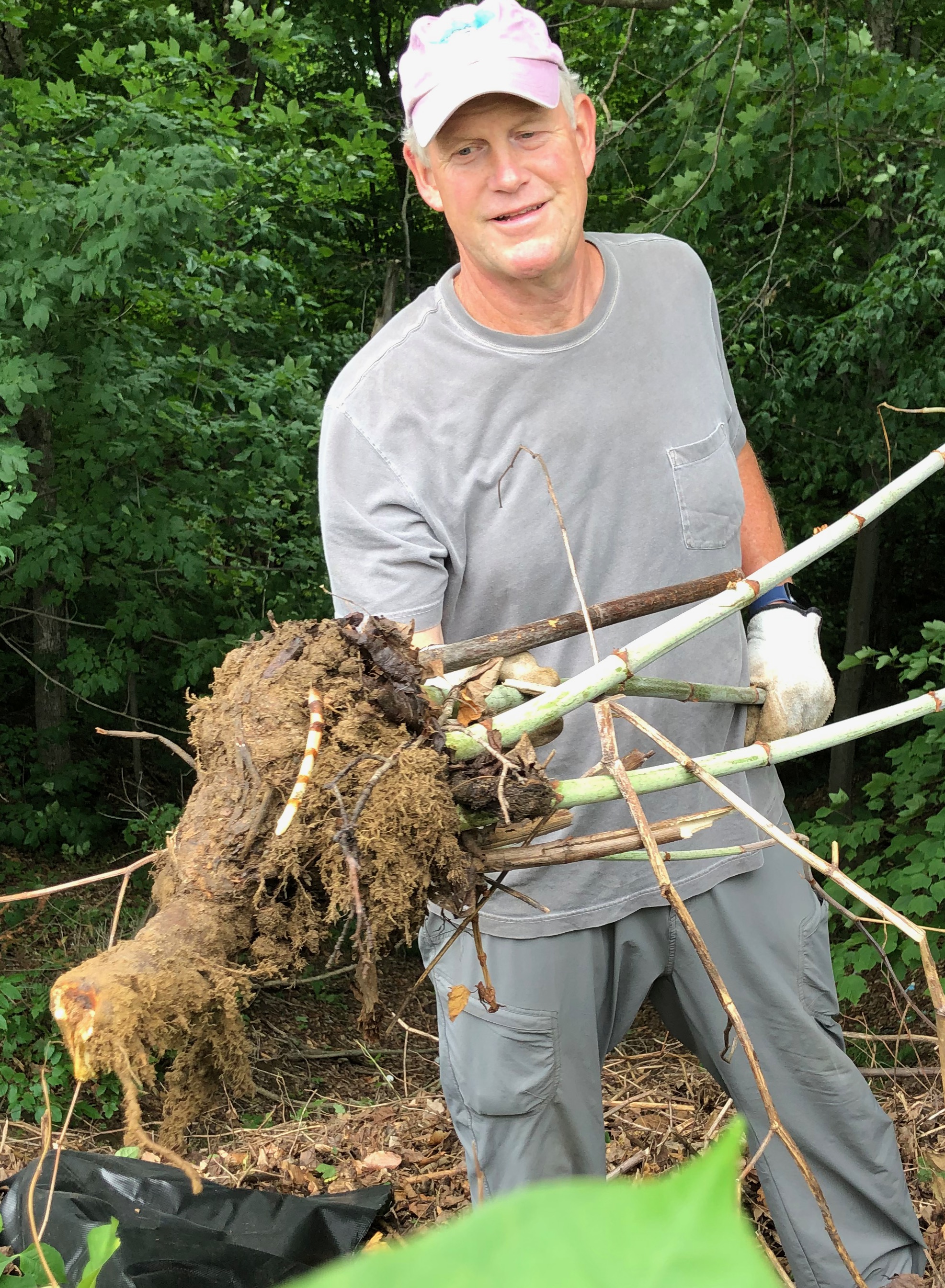
Root masses take a long time to dry out and die and even small bits of rhizome (or even parts of the plant stalk, in the right conditions) can take root and regenerate. Once established, JKW populations are extremely hard to control. The visual impact of these populations is massive; a mature JKW stand is very hard to miss.
So, all other things being equal, if JKW is NOT present at a site it is worth trying to keep it that way; and if it IS present, it is worth trying to contain the stand and stop it from spreading elsewhere.
Read more about the history of JKW and its impact in the UK and the rest of the world here: https://www.theguardian.com/environment/2023/may/16/the-war-on-japanese-knotweed
2025 Season Notes
We've recently wrapped up our fifth season. See our Season 5 Newsletter for details about what we've been up to this past 2025 season.
What is KiHP doing about it?
Education
Educating ourselves and others about the plant's habits and the best ways to stop its spread. We are investigating and experimenting with different control methods, gathering best-practice information, and sharing what we are learning with all interested land-owners.
Field Work
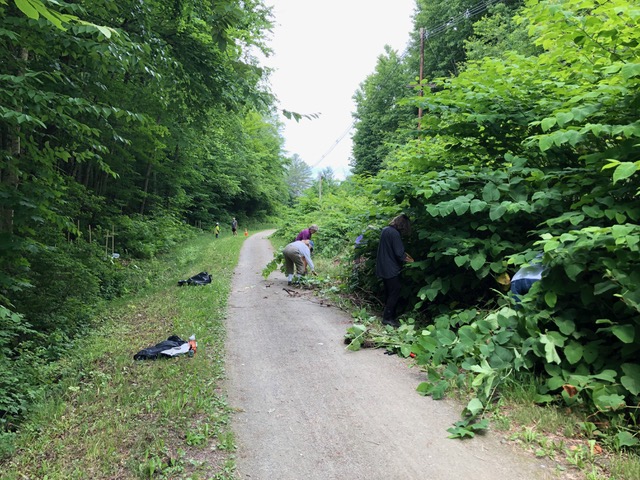
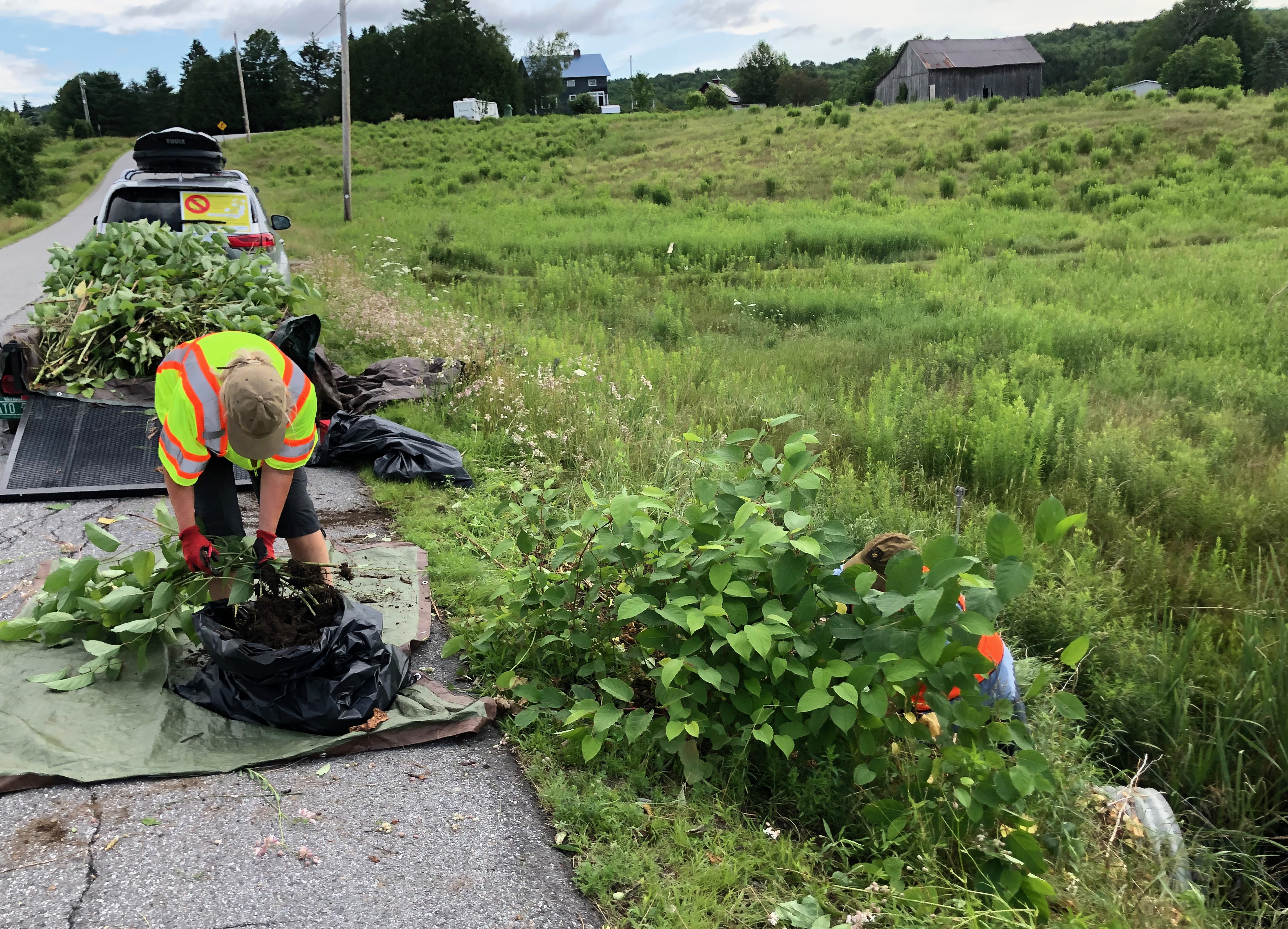
Our primary work takes place along the town’s roads. That’s where the impact of JKW on the community is greatest. The plant’s scale causes visibility issues for travelers and maintenance problems for the road crew. The roads are also the main pathway for spread: big snow melts or flooding events, or just about any kind of road works can see JKW migrating and taking hold in a new location (There are many instances of migration caused by the 2019 Halloween storm, for example.)
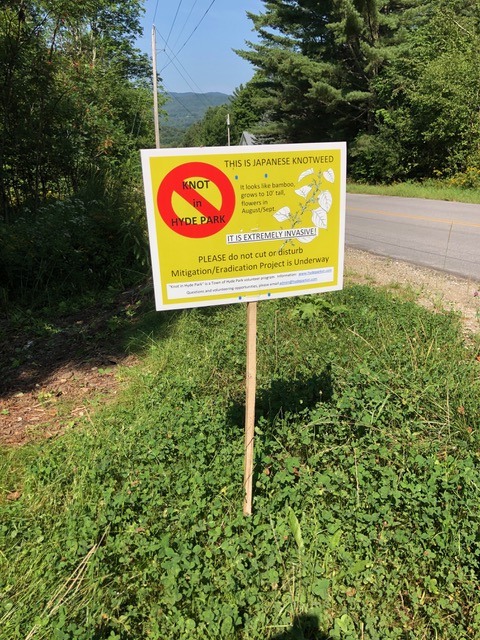
One of the most important things we can do as a community is have a robust “early detection” mentality. Our “early detection/rapid response” work is intended to stop new patches of JKW from taking hold: spot a small patch, dispose of it properly, mark the site with a sign, and keep returning to pull any re-growth until the plant is defeated.
Coordinating with the Road Crew
One of the main causes of JKW spread is the use of gravel/fill contaminated with plant material. Fortunately, Hyde Park’s Road Crew is already well-informed about JKW and sensitive to the problem. We’re coordinating with them to prioritize our field work.
Planning for the future
This is a long-term effort. There is no such thing as making JKW go away in a single season, even when treated with herbicide. That's why we're aiming toward a management effort that is scalable and sustainable; easy enough so that it becomes “just something we do” – like grading our roads, picking up litter on Green-up day, or brush-hogging a field. Our success will depend on the support and involvement of the community.
Important Considerations
The very best way to stop the spread is to Act Early and Persist. If you see a stalk of JKW, contact us and we can help do something about it.
The most important thing for everyone to know about JKW is that you have to be very careful how you handle it so you don't end up accidentally spreading it around and making things worse.
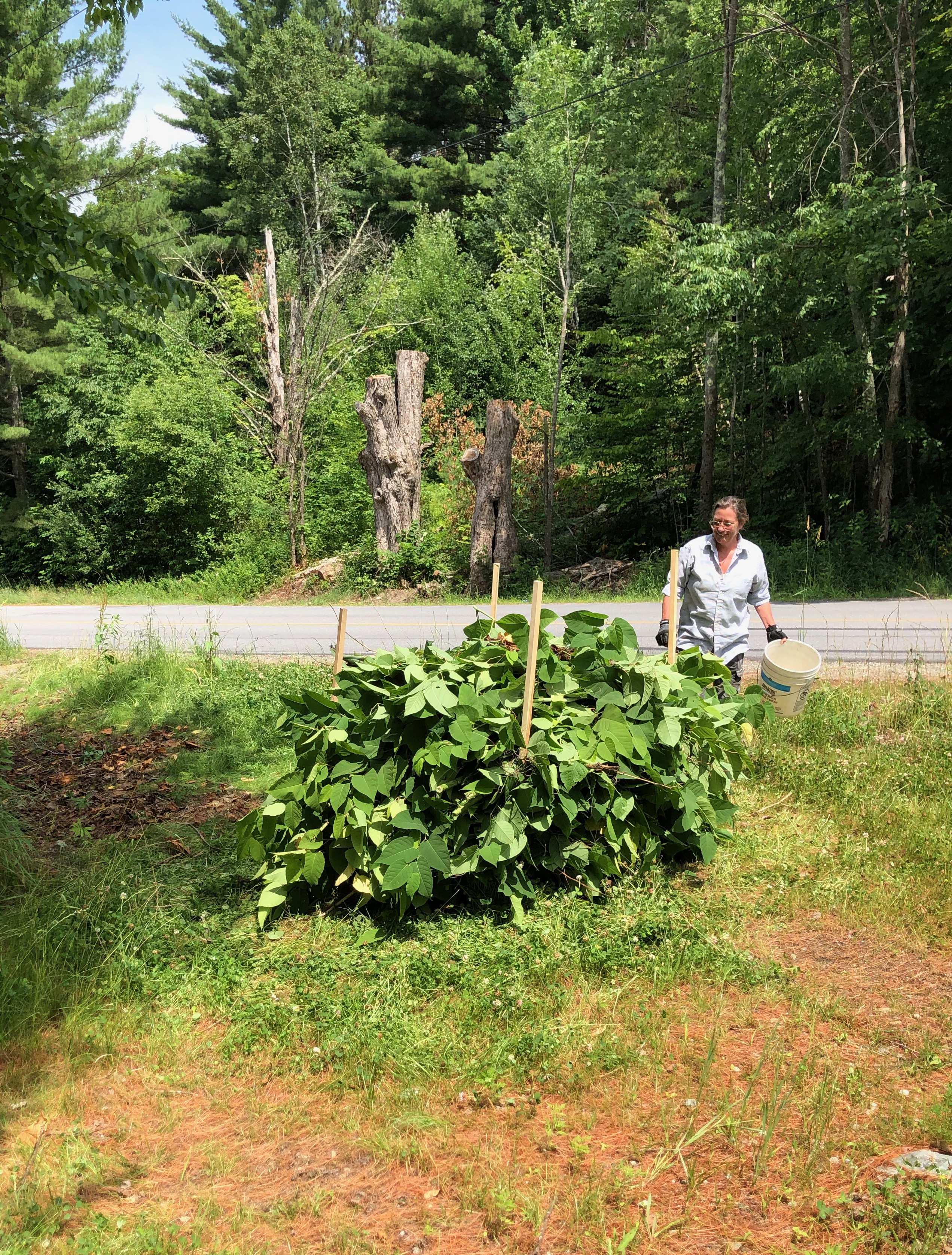
Check out a note about Cutting JKW and Making a Drying Stack to learn how we're composting JKW stalks at some of our sites. The plant's rhizomes (roots that spread horizontally underground) present trickier disposal issues because they remain viable for many weeks, even months. (We have some root masses that have resprouted even after spending many weeks baking in the sun and then an entire winter freezing under the snow!) We're working to find a centralized drying site or sites. In the meantime, Green Mountain Compost in Williston will take invasive plant material from homeowners.
Please Get Involved
Think about tackling a JKW patch near you. We'll help you figure out the best way to do it. This effort is just getting started. What we can achieve will depend on how much support we have from the community. To stay connected, contact us at knotinhydepark@gmail.com.
Additional Resources
Knot in Hyde Park Resources
- Do some springtime hunting for JKW patches with our Green-up Flyer.
- View the map of the locations of the JKW Sites we're working on.
- Check out our FAQs for answers to more common question about KiHP and JKW
- You can also print out a KiHP Leaflet if you want to have something to share with people.
- Check out our guide on Cutting JKW and Making a Drying Stack.
- Check out our Adopt Some Knot flyer
Japanese Knotweed Resources
Contact Us
We want to hear from you! Email us to stay in touch with any demonstration events or to talk about a specific patch of JKW near you knotinhydepark@gmail.com.
Season Notes
Meeting Notes
- Wednesday, February 25, 2026
- Wednesday, January 28, 2026
- Wednesday, October 8, 2025
- Wednesday, April 16, 2025
- Wednesday, March 12, 2025
- Wednesday, August 21, 2024
- Wednesday, July 17, 2024
- Wednesday, April 17, 2024
- Wednesday, March 13, 2024
- Wednesday, January 17, 2024
- Wednesday, September 27, 2023
- Wednesday, September 13, 2023
- Wednesday, July 19, 2023
- Wednesday, May 17, 2023
- Wednesday, April 19, 2023
- Wednesday, March 15, 2023
- Wednesday, February 15, 2023
- Wednesday, January 18, 2023
- Wednesday, October 19, 2022
- Monday, August 8, 2022
- Monday, July 11, 2022